


Canadian Design and Construction Report staff writer
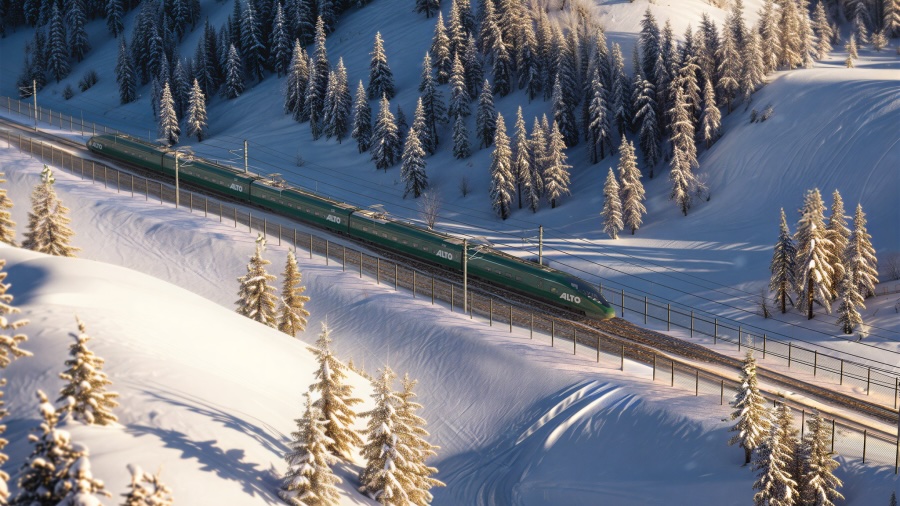
OTTAWA – Canada’s long-awaited high-speed rail network is finally shifting from study to steel, with the federal government confirming onDec. 12 that the Ottawa-Montreal corridor will be the first leg constructed.
In a major announcement for the heavy construction and infrastructure sectors, Federal Transport Minister Steven MacKinnon revealed that the project, overseen by Crown corporation Alto, is scheduled to break ground in 2029.
The initial phase will connect Ottawa and Montreal with dedicated, electrified tracks capable of speeds exceeding 300 km/h, cutting travel time between the two cities to under an hour.
“We are here today to announce that the first section of the high-speed rail network will be the one between Ottawa and Montreal,” MacKinnon said at a news conference, joined by Alto President and CEO Martin Imbleau.
Construction priority: Why Ottawa-Montreal first?
According to Minister MacKinnon, the Ottawa-Montreal route was selected as the priority segment because it is a “relatively short and straight portion” of the wider 1,000-kilometre corridor.
“These high-speed trains, they don’t like curves, they need to go in a straight line,” MacKinnon noted. He added that starting with this leg allows engineering and construction teams in both Ontario and Quebec to “develop together the expertise needed to deliver the other segments” extending to Toronto and Quebec City.
The project is expected to generate tens of thousands of jobs during the construction phase and thousands more during operations. Alto estimates the network will eventually boost Canada’s GDP by up to $35 billion.
Procurement and industry opportunities
For contractors and suppliers, the project represents a massive pipeline of work. The federal government has partnered with Cadence, a private sector consortium, to co-design and develop the network.
Pre-procurement activities for project components are slated to begin in 2026. The project will require significant resources, from steel manufacturing and concrete production to advanced electrical systems and digital technologies.
City of Ottawa officials are already preparing for the influx of activity. In a memo dated Dec. 12, Marcia Wallace, general manager of Planning, Development and Building Services, confirmed that the city has signed a Non-Disclosure Agreement (NDA) with Alto to access detailed mapping and route planning options.
“The City is also interested in the procurement practices that will be used, as the project will create tens of thousands of jobs during construction,” Wallace wrote in the memo.
Integration with local transit
A key focus for Ottawa will be integrating the new high-speed service with existing local infrastructure. The city’s position is to ensure the high-speed train connects seamlessly with the O-Train and other transit systems to maximize mobility.
“Integrating the high-speed rail system with our land use and transportation networks is a high priority for both parties,” Wallace stated.
Next steps: Public engagement
While the alignment is still being defined, Alto is launching a comprehensive public consultation process. A “study area” will soon be released to the public to inform the final route.
Upcoming engagement opportunities include:
- Open houses and virtual sessions: Details available at altotrain.ca.
- Stakeholder consultations: Alto will conduct engagements in Ottawa early next year.
The 1,000-kilometre network will eventually connect seven cities: Quebec City, Trois-Rivières, Montreal, Laval, Ottawa, Peterborough, and Toronto.
This accelerated timeline follows a directive from Prime Minister Mark Carney’s government earlier this year to speed up major infrastructure projects through the new Major Projects Office.
For more information on the project and upcoming consultations, visit www.altotrain.ca.

