


Susanna McLeod
Special to Ontario Construction News
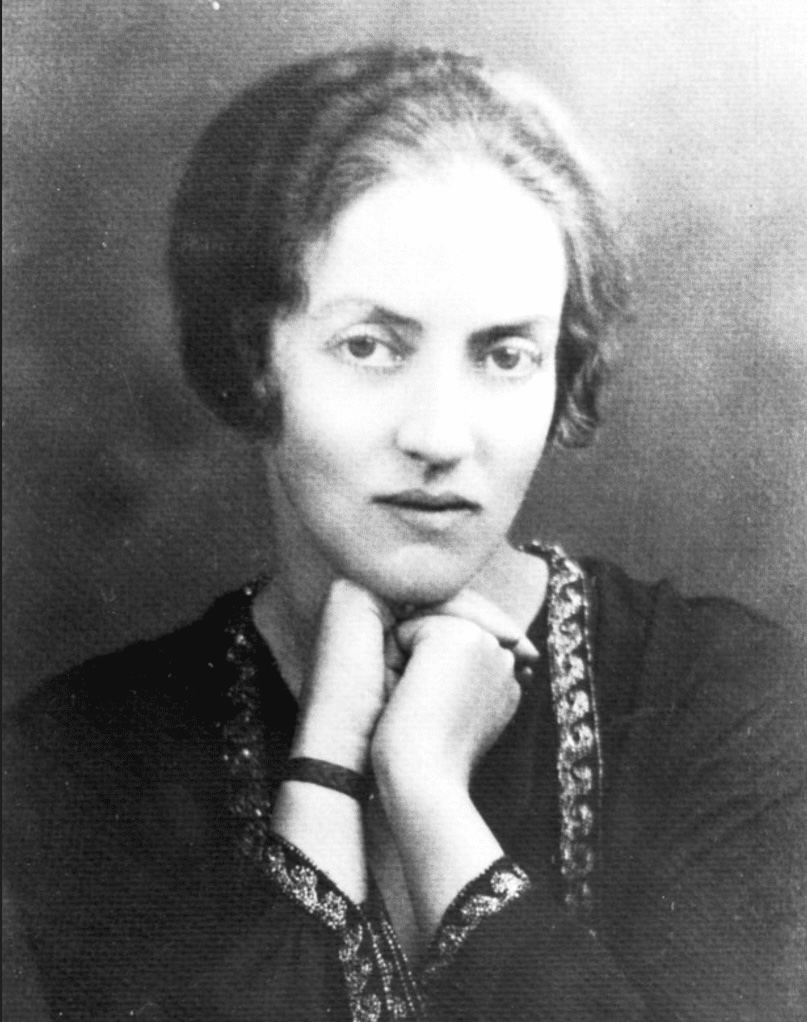
A beacon for young women in STEM, Dr. Alice Wilson loved geology, joining the male-dominated field of the science in the early 1900s. Employed with the Geological Survey of Canada (GSC), she spent her life researching and recording the geodiversity across Canada Wilson’s trailblazing work produced valuable contributions to the construction industry in Ontario.
Spending her childhood summers outdoors with family members, Alice Evelyn Wilson (b. August 26, 1881 at Cobourg, Ontario) camped, canoed, and collected fossils, according to Loris S. Russell and Erin James-Abra in The Canadian Encyclopedia, edited October 25, 2017. Her father was a professor of classics at University of Toronto, and one brother was “a geologist and the other a mathematician.”
Enrolled in history and language at Victoria College in 1901 (at University of Toronto), Wilson developed anemia, a debilitating illness. Recovery was lengthy. In 1907, she worked at the school’s Museum of Mineralogy, and two years later, took a job as clerk at GSC. She catalogued specimens in the invertebrate paleontology section at Victoria Memorial Museum on Ottawa. (Now the Canadian Museum of Nature.) Taking leave to complete her degree, Wilson returned in 1911 to a permanent job with the Survey.
The determined young woman had one more educational step to take toward achieving an authoritative scientific career. Male colleagues were permitted paid leave by GSC to complete advanced degrees, but Wilson’s request in 1915 was declined. She petitioned repeatedly, and the department continually refused. The geologist kept her plans in sight but veered temporarily in another direction.
Serving on the homefront during the First World War, Wilson enlisted with Canadian Women’s Army Corps (CWAC). The unit supported “Canadian troops as decoders, drivers, cooks, stenographers, telephone operators and many other positions,” said Veronica Klassen in Geoscience Histories: Dr. Alice Wilson, July 19, 2022. Wilson proved her ability to take on arduous tasks, but the women soldiers were subjected to “disdain and discrimination by the Canadian public.”
Winning a scholarship from Canadian Federation of University Women (CFUW) in 1926 did not solve Wilson’s dilemma. Her employer remained steadfastly biased, refusing educational leave. Wilson firmly believed it was because she was a woman. The CFUW argued on Wilson’s behalf, and GSC acquiesced. “In 1929, at the age of 49, Wilson was awarded a PhD from the University of Chicago,” said Russell.
Wilson’s pioneering effort was recognized in 1935 when she was made Member of the Order of the British Empire (MBE). The next year, the scientist became a Fellow of the prestigious Geological Society of America, and “became the first female Fellow of the Royal Society of Canada in 1938,” mentioned “Wilson, Alice Evelyn National Historic Person,” Parks Canada, July 19, 2011.
Returning to her job, Dr. Alice Wilson was the first female geologist employed with GSC. Throughout her early work years, she struggled to overcome colleagues’ objections of a woman performing remote fieldwork. Wilson pivoted. She undertook comprehensive research of Ordovician Period fossils (and later, Devonian Period) in Ottawa-St. Lawrence Lowlands, a region close to her home. The project was among her greatest achievements.
Wilson laboured over several decades, “on foot, by bicycle, and, later, by car,” noted Parks Canada Agency, October 18, 2018. She brilliantly accomplished in-depth fieldwork studies, capably and energetically—as good as any of her nay-saying colleagues.
The prominent geological and palaeontological awards opened doors for the skilled woman at the GSC, and she was promoted to Assistant Geologist. However, sixteen years passed before her colleagues would address her by her hard-earned title of ‘Doctor.’ The department’s officials and colleagues quietly continued to disapprove of women rising in the organization—Wilson “requested to be upgraded to Associate Palaeontologist,” for which she was well-qualified, but “a title she was never awarded throughout her career,” reported Klassen.
Although denied career-building prospects at the GSC, Wilson excelled at her research. Most fieldwork was accomplished on her own. She trained a female student in fossil studies, the women working and camping in the wilderness over several weeks. Composing over 50 scientific papers, Wilson drew detailed maps with geological and fossil information. The maps covered vast area—more than 14,250 square kilometres of the Ottawa-St. Lawrence Lowlands.
Dr. Wilson’s fieldwork was an asset to diverse sectors of the construction industry. Among others, her paper “on the geology of the Ottawa-St. Lawrence Lowlands provided valuable information for the building of the St. Lawrence Seaway.”
Retiring at age 65 in 1946, Wilson continued her beloved geological work and travelled widely. Teaching palaeontology at Carleton University, she also wrote the delightful children’s geology book, The Earth Beneath Our Feet (1947). Wilson was Carleton’s first recipient of an honorary LLD in 1960.
On April 15, 1964, Dr. Alice Wilson died at 82. Facing discrimination with the power of a professional, Wilson cleared a path for women to thrive in the sciences.
Susanna McLeod is a Kingston-based writer specializing in Canadian history.

